STEM and the outdoors

This past Fall, I wrote an article for Play Outdoors Magazine about STEM and the outdoors. I stressed the importance of drawing correlations between everyday life and nature, taking STEM out of the classroom and into nature. I love making STEM a priority when taking my own kids out – and the best part is they don’t even realize it!

Here’s a few things to try next time you’re out:

Love puddles?

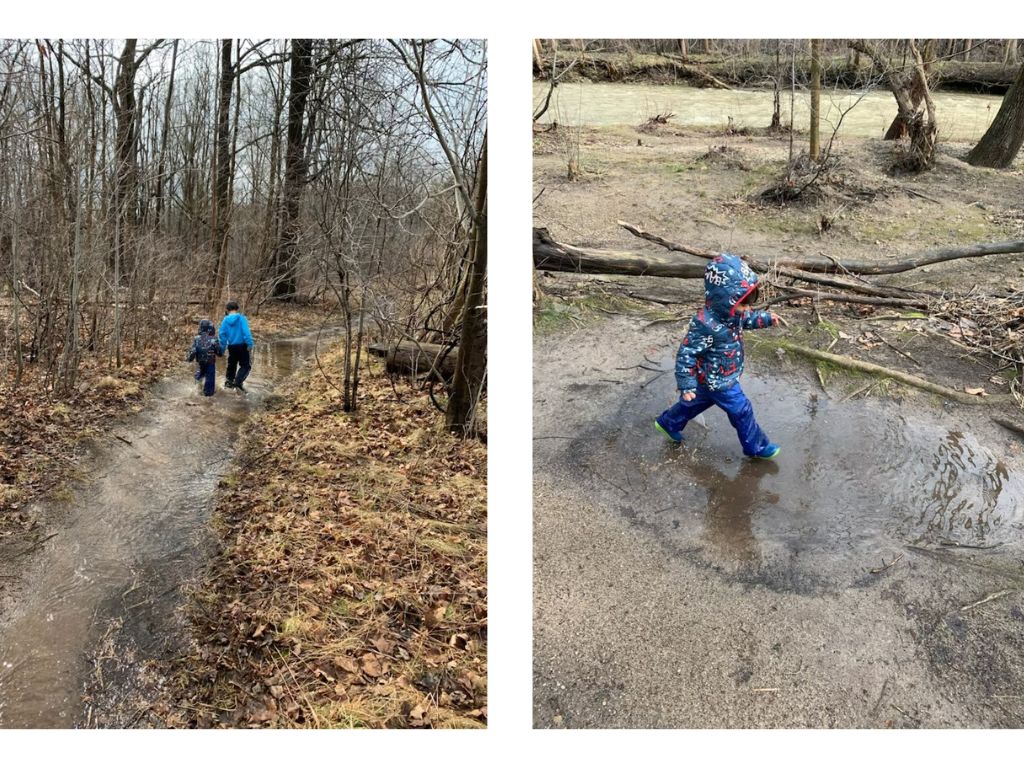
This is the best time to let your little ones splash and jump, so get them to throw big rocks, little rocks and even see if a leaf will sink or float!

Build! Climb! Throw! Squeeze!

You’ll love seeing the structures your kids come up with. Use sticks, rocks, anything your kids find! Check out the shapes and colours – even sort them out in patterns.

Creepy crawlies

These might give you the willies, but most kids love the icky little bugs. Inspect their homes (be careful not to destroy them) and talk about how they survive; climate, food etc.

So, let your kids take the lead! Follow them around nature, not the other way around. Take your time and.. make sure to bring lots of wipes 😉

Lengthening the Leash

When it comes to my preferred education styles, I tend to gravitate outdoors. I love taking my kids to areas they can take a few risks at, and watch how they explore. As a parent to three young, adventurous boys, it’s hard to keep the educator hat on, and not let the safety dad voice take over from time to time. I’m quite open minded as to the risky antics of my trio, often obtaining a few groans and headshakes from my better half along the way, but as our children grow, so do the anxieties of letting them off the proverbial leash. 

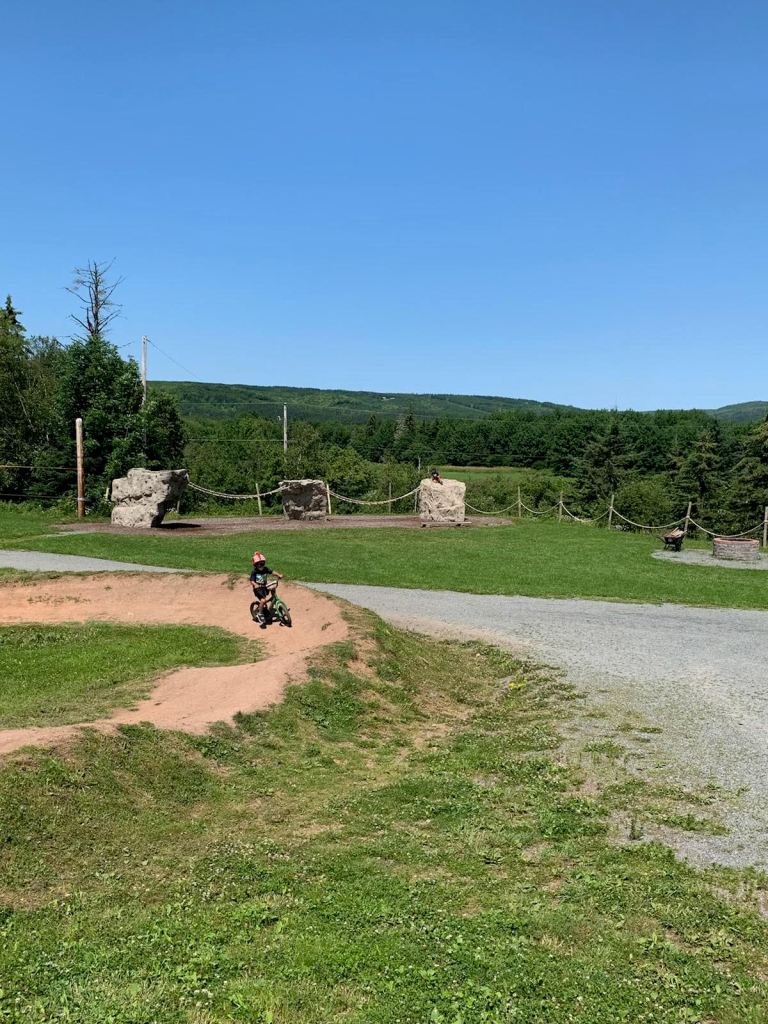
Recently with the weather finally taking a positive turn to more Spring like temperatures, the bikes have made their regular appearance on the outdoor circuit, with my oldest (7yrs) looking to expand his roaming range in the neighbourhood, without the prying eyes of parents in tow.  Fortunately for me, this conversation happened while I was still working and the pressure fell on my wife’s shoulders to make the call, with me receiving the play-by-play via text.  All he wanted to do was head to the park directly behind our house and meet two friends from school, which we have full view of from our living room.  Boundaries were set, knowing full well that this oldest child is a dedicated rule follower, but mom also knows that he knows our neighbourhood well and would always come right home should anything arise. 

Off he went, met his friends, and they played and patrolled around as 7 and 8 year old’s do for about 15-20 minutes, and then they left the park.  Disappearing for about 6 minutes and 24 seconds, the trio appear at our front door (for snacks of course).  The initial rebellion and breaking the one rule to stay in the park was soon overshadowed by how these children responded to the obvious questions as to their very brief whereabouts.  My son replies, “we took the long way back from the park and stayed on the sidewalk the whole way I promise” and without hesitation one of the friends, sensing mothers questionable tone adds, “and the main thing is that we all stayed together”.  They were fine, safe, but is there a risk in deviating from a plan? Yes. It’s about parents process that risk. It’s not only our kids that take baby steps, it’s us as parents, taking baby steps in allowing them to do things to help them thrive.

My oldest doesn’t always have the strongest social confidence (partly because of Covid restrictions and missing school), however now that he’s back in school with his friends as a young grade 2 in a 2/3 split class, when he comes forward to seek opportunities on his own to grow, we can’t get in his way with our own anxieties. Are we upset he broke a rule? Nope. We were secretly impressed. The kid doesn’t break ANY rules! It helps that the two friends are both a year older and more out of the box mindsets (both the youngest in their families…) so they by default are helping him gain more social confidence through their adventurous personalities. 

It’s hard to let them go off on their own because we don’t want them to fail or get hurt, but through those trials and errors is where the magic happens with our kids. They are put through positive adversity and inclined to use their very capable brains to problem solve their way through new situations. We can help them, but we can’t dictate their true path because that is theirs to find. 

Having fun biking

Emerging from Covid – Building back Connections


The last two years have had their fair share of ups and downs for all of us. Let’s face it, the pandemic put a major damper on society in all aspects, and I know all parents (myself included) have struggled with our children, be it socially or academically, no matter their ages.


Two years (and counting…) is a relatively short window of observation time when trying to establish anything concrete when it comes to trends, but we can see some obvious concerning ones, like social development and confidence levels. Looking at my own boys, they have had their ups and downs over the last two years, with the biggest impact on my oldest in grade 2. Every time he gained his confidence back, there would be another lockdown and we would start again. Luckily, we had lots of neighbourhood kids playing outside, so they were able to still maintain some human connection and interaction other than immediate family.


As the pandemic continues, adults are generally able to handle such social changes in moderation given our established skill sets, but with the developing child this isn’t always the case. We often think kids won’t understand more complex situations and conversations, and that they’re not picking up on everything happening in the background, but they are constant sponges for information. We expect because they’re kids they can handle these challenges easier because most of the heavy stuff flies over their heads, but they are deciphering much more than we give them credit for. But really, what worries do they have, it’s only been 2 years of on and off rounds of glorified house arrest – for good medical reason I might add, not playing with politics here people! Regardless, the longer the social isolation periods last, the longer it’s going to take a significant number of children to catch up to the proverbial pack. Yes children are resilient, but to what extent? Educators have always preached that children are stronger and more resilient then we give them credit for, but when do our kids hit their breaking points, and how much toxic stress have they been exposed to that could lead to concerns in the long term?


Children are still learning how to socialize and we’ve been pushing their pause button for 2 years. Will they bounce back? Absolutely. Will they have scars? Absolutely. Some children will have gone through this pandemic relatively unscathed, (not speaking to the obvious medical implications of covid) but that’s not the case for a vast number of children out there. There are a number of variables to look at. Increased screen time, decreased social connections, isolation, anxious parents, added stress with restrictions, the list goes on.


People may be quick to point out that increased screen time is solely to blame for the decrease in childhood socialization and covid has certainly exacerbated that notion, but by no means is it the main culprit. Screen time sees its fair share of controversy and can undeniably be used in negative ways, but in the pandemic, screens were able to give kids a connection, to grandparents, relatives and friends. In older kids, video games were their only connections to other peers. If actually used effectively, screens can greatly increase a child’s ability to make positive connections with friends or peers that perhaps they may not have had the confidence to do before. They can be a safe bridge for these connections, but the parent and elder millennial in me knows they can also lead to negative experiences. So long as you have proper interventions in place with your kids, you can keep a relatively tight lid on them.


When we allow too many of our own anxieties to enter our children’s lives, we are helping to perpetuate those mindsets into the next generation, and you can see where this could pick up speed with other parental influences and bias… We can only keep our children safe to a certain point of control, but many allow themselves to be consumed by it and try to control the parts we can’t, which then breeds developmental road blocks.


In my opinion, I can see a number of children and teens carry social and emotional scars through their development into adulthood based on these pandemic years, and the missed opportunities the had to build connections and relationships. Now that restrictions are eased, (whether you may agree with them or not) the longer we hold children back from having new experiences and keep them socially isolated, the longer it takes them to find their foot hold and keep climbing.
Stuck in the Middle Child

My trio of boys (7, 4, 2.5 years old) are quite the little team, each possessing their own likeness and variance with a healthy mix of my wife and I. Although I’m quick to point out any potential flaw in them is always from mothers side of the gene pool,(she loves that) I will own the stubbornness (sorry dad).


Being in the early years and education field for over 10 years now, I have always viewed and observed kid order with a fatherly lens, but also as an educator. They continue to be my little case studies in action, and now that the troop is complete (contrary to what some may think we are VERY happy with our three boys, and won’t be trying for a girl…) it’s been almost 3 years with one stuck in the classic middle.


I’ve seen the various memes and reels about the stereotypical hierarchy of behaviours and temperaments of birth order (if you don’t already, follow the funniest middle child @tj_therrien, for spot on posts and reels!) but as the youngest child in my family of 3 older sisters, I was a little spoiled. The middle child usually gets over looked, and even though I said I’d “never be one of those parents”, we definitely fit that trend. By no means is my middle guy neglected from a children’s service perspective, he’s just so ‘go with the flow’ that we seldom ask his choice or opinion on things because we don’t get much push back. Our youngest child officially runs the show which shouldn’t surprise anyone with multiple kids, and the oldest tries to restore balance through structure and routine, falling quickly on ears that don’t care to listen.


A few weeks ago, middle spoke up and made his own call. He was finally sick of his younger bro watching ‘Blaze and the Monster Machines’ on repeat (there’s lots of counting and shapes and colors so it counts, right?) and said “I never get a turn to pick, you guys always get a turn now I want a turn”, and the room went silent for a hot minute. The initial toddler rebellion was boisterous and dramatic, oldest is already pretty worn down from the toddler and is just happy to see him not win so he was a quick fold, but middle stood his ground and silenced his critics. He sat there glowing in his win, watched his show peacefully for 4 and a half minutes, went to pee and never came back. Not sure if he really cared about the show at all, or just wanted to maintain his mischievous power control over his brothers? Either way it did point out how easy it is to put some things on cruise control in your house.


Middle children seem to show more independence and are shown to have better “street smarts” than their predecessors. The first born gets held and coddled, which usually breaks down by the next child and especially if you drop (no pun intended) number 3 soon after, the middle little quickly has to fend for themselves with mom and dad’s attention, shifting to the new King of the Castle.


It’s always a challenge to balance work and kids and giving each one an equal amount of face time, (your real face not the screen face), isn’t always easy. As educators, these are usually the ones who don’t need as much attention to thrive, but I’m here today, to stick up for the middle child! Give them a voice, you may be surprised at what they come up with.


p.s – Don’t feel too sorry my middle little, he usually flashes those dimples and gets away with anything..

Entering the Sports Game

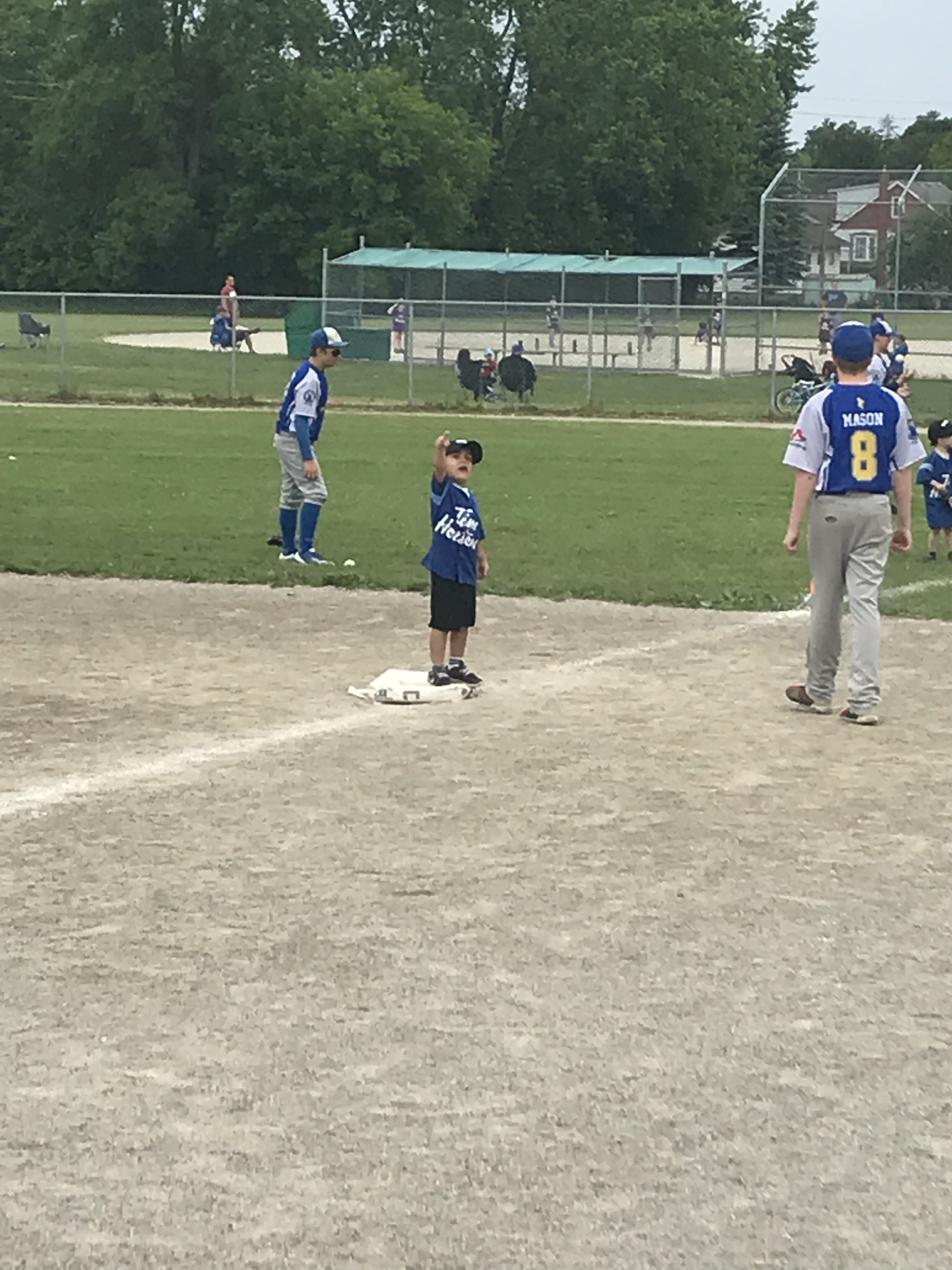
fin baseball first base

I’m often asked when a child should start organized sports, and my responses tend to vary with everyone.  There are a considerable number of factors that can indicate if a child is ready to play a sport, motor development and socialization are the big two I tend to focus on.  Parents today get sucked into the trap of over engaging their children in sports and other activities that they may or may not like, all seemingly geared for the child’s benefit.

We signed my oldest son up for soccer last spring, he was around two and a half at the time and I am sad to say my expectations weren’t the highest for him.  He was playing with other children from 2-5 years of age, some for the first time, and some with a year or two of experience.  His main downfall was his motor development, not to say he wasn’t where he should be for his age, but he was just perfecting his run and jog, his developing brain wasn’t ready to coordinate kicking a ball at the same time.  The instruction although good for some of the children, didn’t cater to all the skill levels present.  Adding an element of physical literacy to the program would have been hugely beneficial for those growing legs.  So his interest waned, and we generally ended up over at the playground within 15 minutes of the start of soccer practice, something that I was just fine with, at least he got a cool jersey and a ball out of it!

Fast forward one year to the present, same child just finished week two of T-ball, still not completely ready yet developmentally but the program is very well designed, with numerous rotating stations that focus on those motor skills they’ll need.  Each station they attend (roughly 6-7 children in a group) is 10 minutes, any longer and you start to see the drifters and dandelion chasers come out.  The best part, not once have they actually played the game of baseball, only learning the basics to piece it together down the road.  Once my son got over his week one jitters on the social side of things, in week two he was able to actively participate to his abilities through the support of amazing young coaches and volunteers.  He may have drifted his attention a bit, possibly started a laugh filled grass fight with a teammate, but he was coached according to his abilities.  This is something we need to focus on not only for sports, but from all facets of the education spectrum.

So to answer my initial question of when to start your child in sports, it all depends on the child.  Don’t force your child into a sport or activity that they don’t like, and don’t be frustrated if your child can’t keep up.  Let them learn at their speed, let them explore their interests, let them follow their own path, even if that path leads away from the soccer field and towards the playground.